
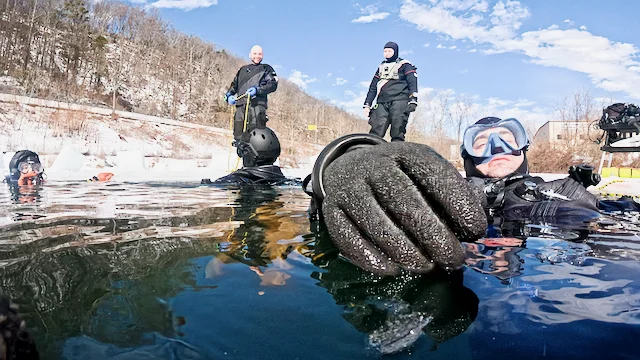
Cold Water Diving in New England — How to Stay Warm, Safe, and Comfortable Year-Round
Gear Reviews · 8 min read
New England is not a tropical dive destination. The water is never balmy, visibility varies by day and season, and the conditions demand a level of preparation that warm-water diving simply doesn’t require. But ask experienced local divers whether they’d trade it for the Caribbean — and most of them will pause before answering.
Cold water diving in New England offers something the tropics rarely deliver: dramatic underwater topography, genuinely diverse marine life, historical wreck sites, variety on a daily basis and a sense of accomplishment that comes from diving conditions that test your skills. The divers who invest in the right gear and the right training don’t just tolerate New England diving — they love it.
Understanding New England Water Temperatures
Connecticut and Rhode Island waters follow a predictable seasonal pattern. Surface temperatures peak at 70–72°F in late July and August before dropping steadily through fall and winter to a low of around 34–38°F between January and March. Spring sees gradual warming, with comfortable temperatures returning by June.
Critically, surface temperatures tell only part of the story. Below the thermocline — typically 20 to 40 feet depending on the season — water temperatures can be significantly colder than the surface reading. A diver who plans for 68°F surface water in July may encounter 52°F water at 40 feet, especially in lakes and quarries. This is one of the most common cold-related surprises for newer local divers, and proper thermal protection needs to account for it.
Thermal Protection — Wetsuit vs. Drysuit
The most important cold water decision is thermal protection. Your choice of exposure suit determines your comfort, your safety, and how long you can stay in the water.
Wetsuits
Wetsuits work by trapping a thin layer of water against your skin, which your body warms and which then acts as insulation. They’re effective within limits — but those limits are real. In water below 55°F, even a 7mm wetsuit struggles to keep most divers comfortable for a full recreational dive. Fit is critical: a loose-fitting wetsuit flushes constantly, eliminating the insulating water layer and dramatically reducing warmth.
For New England conditions by thickness:
- 3mm full suit: suitable for 65–72°F (summer surface water). If you run cold, consider a 5mm.
- 5mm full suit: suitable for 50–65°F (spring, fall, and below the thermocline in summer). If you run cold, consider a 7mm.
- 7mm full suit: suitable for water below 50°F. If you run cold, a drysuit is worth serious consideration.
Drysuits
Drysuits seal completely at the neck and wrists, keeping you entirely dry and allowing you to wear thermal undergarments underneath. In water below 50°F — and for divers who want to dive year-round without the cold being a limiting factor — a drysuit is the most significant gear upgrade available. The learning curve is real but short, and most divers are comfortable and confident in a drysuit after just a few dives.
At Scuba Shack CT we carry wetsuits from Henderson and Sharkskin and offer drysuit certification for divers ready to make the transition.
Hood, Gloves, and Boots — The Extremities Problem
Your extremities lose heat faster than your core. In cold water, unprotected hands, feet, and head can become uncomfortable — and eventually dangerous — even when your body core remains warm.
Hood
A 5mm or 7mm hood is appropriate for temperatures below 60°F. One important note: a tight-fitting hood can trap an air pocket over your ear canal, making equalization significantly harder. Before descending, tilt your head side to side to allow water to flood under the hood and contact your ears. This simple step solves one of the most common cold-water equalization problems.
Gloves
3mm gloves work for summer diving. Below 55°F, 5mm or 7mm gloves are worth the bulk. Dexterity decreases with thicker gloves — practice operating your equipment with gloves before diving in challenging conditions.
Boots
5mm or 7mm boots for any shore diving below 60°F. They protect your feet from rocky entries and provide meaningful thermal insulation for the duration of the dive.
Planning Your Dive for Cold Water
Cold water demands more conservative dive planning than warm water. Physiologically, cold accelerates nitrogen absorption slightly and increases the work of breathing. Practically, cold water reduces your no-decompression limits and should factor into your surface interval planning.
Stay well hydrated before cold water dives — dehydration thickens the blood and reduces your body’s ability to manage nitrogen efficiently. Eat something substantial before diving in cold conditions. And know your limits: if you’re shivering before you enter the water, the dive can wait.
The Reward
None of this is meant to discourage cold water diving. Quite the opposite. The divers who put in the preparation — the right suit, the right accessories, the right planning — consistently describe New England diving as some of the most rewarding diving they’ve ever done. Rocky walls, kelp forests, lobster, tautog, seals, historical wrecks, and genuine seasons that change the underwater world throughout the year. That’s a dive environment worth investing in.
New England Thermal Protection Guide
Match your suit to the conditions — and plan for what’s below the thermocline, not just the surface.
65–72°F · Summer Surface
3mm full suit minimum. 5mm if you run cold or plan to go deep below the thermocline.
50–65°F · Spring & Fall
5mm full suit with hood and gloves. 7mm if you run cold. Add boots for any shore entry.
Below 50°F · Winter
7mm wetsuit or drysuit. Hood, 7mm gloves, and 7mm boots essential. A drysuit is the better choice for regular year-round diving.
Year-Round · Drysuit
The single biggest upgrade for New England divers. Short learning curve, immediate comfort gains. We offer drysuit certification at Scuba Shack CT.
Get Geared Up for New England Diving
Scuba Shack CT in Newington is your local resource for cold water gear, drysuit certification, and the local knowledge that makes New England diving worth it.
Leave a Reply